Author Insights: Ethan Stone and Sara York on writing Trans* Romances

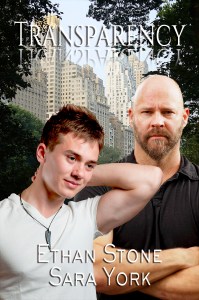
TransparencyStoneYork1500At our January 2014 Portland LGBT Romance Reader Group Meeting, we got the chance to talk with GRNW author Ethan Stone about his 2013 trans* romance story Transparency and about how well it was selling.

The story’s success seemed to counter arguments that there isn’t much of a market or demand for romances with trans* and gender queer characters, so we wanted to sit down and chat with him and coauthor Sara York about the story.

What prompted you both to write Transparency?

Ethan: The idea originally came to me at the GRNW meet up in Seattle. Several people said that there was a lack of stories with trans and lesbian main characters. The idea of writing a trans man started percolating in my brain.

Sara: I’d been thinking of writing a trans story but I didn’t really know where to start. When Ethan mentioned writing one together I said yes immediately.

Did you do research to help prepare?

Sara: I did do some research on female to male transfers. There seems to be a lot of misunderstanding of transpeople. The reasons to change are as varied as the people themselves. Both MTF and FTM are individuals and want to be treated as such. I found that there are some basic rights that are missing that need addressing. It’s difficult for understanding to come to the mainstream if we don’t talk about some of the issues.

Ethan: I admit I don’t usually do a lot of research for my writing, but I did do some this time. I looked at some porn including the amazing Buck Angel. I looked at the use of dildos and how many men see it as an extension of their bodies.

Sara: Ethan introduced me to Buck Angel. It was a side of porn I’d never seen. I think the diversification in the LGBT community is broader than what the current writing community is embracing.

When you published Transparency, how was the response after?

Ethan: I was very pleased with the reviews and comments we got. I didn’t hear any negative comments about the story itself, except that it wasn’t long enough.

Sara: I’m very happy with the reception. I will be looking to include more trans stories in my books.

Did sales meet expectations? Surpass?

Sara: Sales far surpassed my expectations. We really had no idea how many people would be interested in reading about Charlie and Taylor.

Ethan: I have been absolutely blown away by the sales. I think it’s amazing that so many people have read it.

Do you have any recommendations for other writers who want to write stories that focus on trans* characters?

Sara: Do some research and look at the community. Write from the heart, not just because you want to write a character for the novelty of it.

Ethan: Don’t be afraid to write it if you want to. Don’t let the idea of bad sales keep you from doing it. I think there is an audience for trans* romances. If the story is done right it will speak to all audiences. Some people may feel that because the character doesn’t have a cock he can’t be considered a gay man. However, it’s not the outside that matters, it’s the inside. Taylor is a gay man who happened to be born in a female body. He had surgery on his upper half but not on the lower half. This is a decision every trans* person has to make for themselves. The fact that Taylor doesn’t have a dick doesn’t make him less of a gay man.

Ethan Stone is becoming a duck once again. After more than a decade away from the soggy state of Oregon, he is back in his home state. He used to have a day job where he wore a sexy uniform to work; now he can wear whatever he wants to work as he attempts to see if this writing thing can support his Mt. Dew addiction. Visit Ethan at his website!

Sara York enjoys writing twisted tales of passion, anger, and love with a good healthy dose of lust thrown in for fun. Almost a quarter of a century ago Sara met her lover, falling for him after knowing him for ten minutes. Sara’s passion for him comes out in her stories, mixing with her passion for life, love, and good times, flowing onto the page and becoming tales from the heart. Visit Sara at her website!

Gaylaxy Quest this Friday in Seattle!

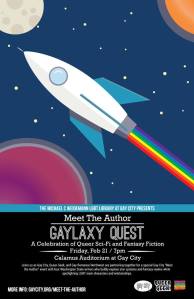
Gaylaxy QuestGay City, Queer Geek, and Gay Romance Northwest are partnering together for a special Gay City “Meet the Author” event with four Washington State writers who boldly explore star systems and fantasy realms while spotlighting LGBT main characters and relationships.

Join us on Friday, February 21 for Gaylaxy Quest: A Celebration of Queer Sci-Fi and Fantasy for an out-and-proud and out-of-this-world evening of readings by GRNW 2014 authors Astrid Amara, Ginn Hale, Laylah Hunter, and Samuel Jarius Pettit. From Lambda Literary-nominated fantasies to taut sci-fi thrillers to racy space romps, each author takes the reader on an exciting, imaginative journey.

The event will start at 7pm and will include readings, a Q&A with the authors, and a post-event reception. The event is free.

Pre-Reading Meet-Up!

For those who would like to meet before the reading, come join us at the cafe that’s connected to Gay City at 6pm! (Gay City is at 517 E. Pike Street in Seattle’s Capitol Hill neighborhood.)

We’ll have a little sign that says GRNW for those looking for us at the cafe. Then we’ll head over to Gay City’s Calamus Auditorium for the reading at 7pm!

About the Authors

Astrid Amara is a Lambda Literary finalist for her fantasy epic The Archer’s Heart, and is known for both her contemporary and speculative romance works, including Policy of Lies, Water, and the urban fantasy anthology Irregulars.

Ginn Hale’s fantasy/steampunk novel Wicked Gentlemen was a Lambda Literary finalist and won the Spectrum Award for best novel. Her other works include the 10-part fantasy epic The Rifter, the two-part fantasy series Lord of the White Hell, and a contributing story in the urban fantasy anthology Irregulars.

Laylah Hunter writes speculative fiction, often queer, often erotic, often concerned with power dynamics, and sometimes all of those things at once. Hunter’s work includes stories in the fantasy anthologies All Wrapped Up and Masks Off Too!

Samuel Jarius Pettit is the author of the sci-fi novel Aklesh. Along with his writing, Pettit has appeared with Seattle Opera, Barrington Stage Company & VT. He teaches at Studio East in Kirkland and has worked regionally as choreographer and director of many stage productions, including Legally Blonde, Oliver, and Pirates of Penzance.

How to be a better Beta Reader

AnnabethAlbertby Annabeth Albert

Who wouldn’t love a chance to read new books from a favorite author before they come out? Most people would jump at such a chance; however, the reality is that beta reading is much more intense and time consuming than regular reading. Over the last three years, I’ve been fortunate enough to beta read/critique for multiple authors, and I have had wonderful readers and writers serve as beta readers for me.

Whether you are already a beta reader or critique partner for an author, would like to be, or are just curious about the process, I have tips to make your beta reading experience more pleasurable and productive.

What is a Beta Reader?

First, the terms “beta reader,” “first-reader,” “critique partner ,” and “CP” are sometimes use interchangeably. The main difference is that critique partners usually trade off reading each other’s manuscripts while a beta reader or first reader usually reads without the expectation of reciprocation—indeed, many beta readers and first readers are not themselves writers. They are simply avid readers who have volunteered to help a writer advance his or her craft.

A beta reader usually reads an early draft of a book before it is submitted to editors or agents or formatted for publication. A beta reader or critique partner is not a substitute for an editor or proofreader—although many are very good at finding errors and typos, it’s not their primary job. Also, a beta reader is different from a reviewer—the ARC (advanced reader copy) that a reviewer gets is a final draft. While early reviews are awesome, feedback to the writer on an ARC usually isn’t helpful because often the writer is not in a position to make last minute changes. A beta reader reads during the early part of the editing cycle while the writer still has ample time to tinker with the story.

Getting Started

If you have been asked to do a beta read for an author, the first step is to communicate before you start reading. Make sure that you have discussed:

  • Timetable for the read. Ask the author for a deadline. Unexpected events and emergencies happen, but it is always good form to let the writer know if you won’t be able to make the deadline you discussed. As a writer, if you have a deadline for submittal, it is helpful to communicate that to your reader.
  • Genre and target audience. While not essential, it is very helpful to be widely read in the genre you are beta reading. If you are not familiar with the particular subgenre, you might spent a few minutes browsing the best-sellers in that genre so you can get a feel for what is selling and what is common in that genre. The more familiar you are with the genre, the more easily you can discuss how readers may react to the book.
  • What sort of feedback the author is seeking. Some writers simply want a very top-level, general impression of the book, while others may want more specific feedback. As a writer, it can be very helpful to give your beta readers a list of questions or concerns. Further, it can be helpful to communicate what is not a concern—i.e. some writers already know what things they won’t be changing and that can be helpful information for the beta to know.
  • What format feedback should take. For writers looking for general feedback, an email may be sufficient to provide impressions of the book and answer any questions the writer has. Other writers may prefer Word’s track changes & comment box features. Other possibilities include feedback via mobile device app (like iPad’s  or Quick Docs for Android), Google documents, or using skype/messenger to discuss the book.  If you plan to read the book on your e-reader or mobile device or lack Microsoft word, tell the writer so that she or he can get you an appropriate format.

Giving Feedback

When you are ready to give feedback, keep in mind:

  • Always open with what you liked about a book or what you think the author did well. It doesn’t matter how many books someone has written, hearing what’s working is always nice and it makes any critique go down easier. If you are doing comment boxes, drop an occasional comment on something that really works well.
  • Conversely, don’t ONLY focus on the positive. Remember, the point of a beta reader is to help the author make this the best book possible. Think about what it would take for this to be a keeper shelf book for you. What things could improve to make this a surefire keeper? Don’t be afraid to toss out some suggestions.
  • Don’t rewrite. If you are using MS Word, feel free to point out misspellings and grammar mistakes if that is something the author wants. But don’t rewrite entire sentences or passages. Some authors may prefer you to not touch grammar or typos at all and just focus on the story as a whole.
  • Focus on what is fixable. For example, if you would love the story more if it were not set in France, that sort of change is probably not going to happen. But if you would love the story more if only you could understand why they were in France, that sort of change is totally feasible.
  • Be specific. Instead of talking in generics like “This character isn’t likable,” try to be specific about what isn’t working for you. “Rudolph isn’t likeable because he never tries to stand up for himself.”
  • Be flexible. Keep in mind that even if the author doesn’t take all of your suggestions, you have still done an awesome job by giving him or her a lot to think about. A writer may go his or her own route to fix the problem or may decide to leave things as they are. Don’t take it personally—your feedback is always valuable!

In the comments, tell me about your experiences with beta readers. If you are a writer, what do your beta readers do that you love? If you are a beta reader or critique partner, what helps you the most to give good feedback?

Annabeth Albert grew up sneaking romance novels under the bed covers. Now, she devours all subgenres of romance out in the open—no flashlights required! When she’s not adding to her keeper shelf, she’s a multi-published Pacific Northwest romance writer. Please join her on Twitter, Facebook, and her website to learn what she’s working on and to join the pursuit of the perfect date-night movie, self-knitting yarn, and guilt-free chocolate.

GRNW Round Robin part 4 by Jeffrey Ricker

Image by ObsessionDesign on Zazzle.

Image by ObsessionDesign on Zazzle.

The next part of the Library Pirates saga continues in part 4 of the GRNW GoodReads group Round Robin!

This episode is by GRNW 2014 author Jeffrey Ricker, and here we find poor Baxter escaping down waterfalls and kissing hot pirates as he searches for a book that might help get them out of this mess. Only what he discovers just adds more to the mystery!

Check it out! GRNW Round Robin part 4

And if you’re just coming into the story, you can catch up easily still to the earlier parts of Baxter’s library adventures:

Part 1 by Kim Fielding

Part 2 by Andrea Speed

Part 3 by Talya Andor

Stay tuned for the next installment!

Rainbow Valentine this Thursday in Seattle!

Feb13_Box2This Thursday, February 13 at 7pm, come join Gay Romance Northwest as we celebrate love stories at Seattle’s University Book Store!

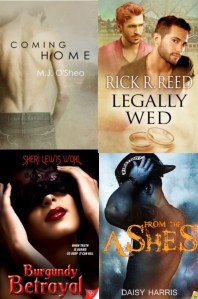
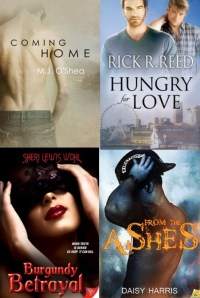
At Rainbow Valentine: A Celebration of LGBT Romance Fiction, GRNW 2014 authors Daisy Harris, M.J. O’Shea, Rick R. Reed, and Sheri Lewis Wohl will all read from their work.

This reading event is open to the public and free! The reading will be held on the second floor of the book store. Come join us! 😀

Pre-Reading Meet-Up!

For those who would like to meet before the reading, come join us at the bar/restaurant Flowers (4247 University Way NE) at 6pm where we’ll be chilling before the event.

Everyone will start to head over to the University Book Store at around 6:45. (The U Book Store is just one block from Flowers, at 4326 University Way NE.)

About the Authors

Daisy Harris is a retired party girl and science fiction enthusiast who spends most of her time writing sexy romance and plotting the fall of Western civilization. She is the author of multiple gay romance novels including From the Ashes, After the Rain, and the Men of Holsum College series.

M.J. O’Shea has been writing romance since algebra class in sixth grade. When she’s not writing, she loves listening to nearly all types of music, painting, and reading great authors. She has written multiple gay romance novels, including One Small Thing, Catch My Breath, and Coming Home.

Rick R. Reed is all about exploring the romantic entanglements of gay men in contemporary, realistic settings. While his stories often contain elements of suspense, mystery, and the paranormal, his focus ultimately returns to the power of love. He is the author of dozens of published novels, novellas, and short stories and is a three-time EPIC eBook Award winner for his novels Caregiver, Orientation, and The Blue Moon Café, and a 2013 Rainbow Award winner for his novel Raining Men.

Sheri Lewis Wohl grew up in northeast Washington State and though she always thought she’d move away, never has.  Despite traveling throughout the United States, Sheri always finds her way back home.  And so she lives, plays, and writes amidst mountains, evergreens, and abundant wildlife. She is the author of multiple lesbian paranormal romance novels, including Crimson Vengeance, Burgundy Betrayal, and Scarlet Revenge.

Join the event on Facebook or visit our events page to learn more about this reading and more upcoming GRNW events! 😀

Rainbow Romance Writers Plans for 2014

RRW Button 500By Kate McMurray

We’ve arrived at a really interesting and exciting time in the publishing industry when there are new opportunities arising for writers of LGBT romance every day. Rainbow Romance Writers’ goal is to find the way to best serve the interests of professional writers in this community. As such, we have a number of exciting things we’re planning in 2014.

I’ll start with my pet project: library and bookstore outreach. One of the first things I got involved with when I first joined RRW at the beginning of 2012 was to help administer a survey of romance readers asking a bunch of nosy questions about reading and buying habits. After the survey concluded, I crunched and analyzed all the data. One piece of information that was a surprise to me (but should not have been) is that ravenous romance readers also tend to be loyal library patrons, and the library is an important place of discovery. I started investigating further last year, talking to librarians I ran into at conferences and gathering information. LGBT romance has thrived online thanks to enthusiastic fans and digital-first publishing. But there’s room for it to grow. By the end of this year, I’d like to see more LGBT romance in brick-and-mortar spaces, libraries in particular but also bookstores.

In 2013, we let our chapter newsletter fall by the wayside, but this year we’re bringing it back in a new way, in the form of a public chapter blog to which all members will be able to post. Having the blog be public will also allow non-members to get more information about what we’re about and how we can help writers. You can find the blog here: http://rainbowromancewriters.com/site-blog

With the RRW website now sitting pretty on a new, faster server, we want to launch our online classroom, which will offer classes on a variety of topics for writers. Classes will be open to members and non-members alike! Hopefully we’ll have more information about that soon.

Past-president Damon Suede still has his own pet project of working with Amazon to get romance books tagged and categorized better, making it easier for books to find their way into the hands of the readers who want them.

And of course, we want to keep up the good work past boards have started, advocating for professional writers of LGBT romance. This includes continuing to have a presence at big conferences such as RT, RWA National, and Book Expo America as well as smaller events like GRL, Authors After Dark, Gay Romance NW, the Liberty States Fiction Writers conference in New Jersey, and the Rainbow Book Fair in New York City. We’re encouraging our members to attend smaller regional conferences as well. So if you’ve got a favorite author, you may be able to see him or her at a conference near you.

RRW is unique among RWA chapters in that it is one of the largest chapters and it has a great number of published and experienced authors. My goal for the chapter is to serve both seasoned authors and fledgling aspiring writers alike. As of today, we have about 130 members, and that’s a lot of resources to pool. We can all learn from and inspire each other; that’s one of the things I love about being part of a chapter like this. So I also want to encourage participation, because that’s how members can get the most out of the chapter.

Personally, I’m really excited and optimistic about 2014 and what it will mean for authors of LGBT romance.

Kate McMurray is an award-winning author of gay romance and an unabashed romance fan. When she’s not writing, she works as a nonfic­tion editor, dabbles in various crafts, and is maybe a tiny bit obsessed with baseball. She’s currently serving as President of Rainbow Romance Writers, the LGBT romance chapter of Romance Writers of America. She lives in Brooklyn, NY. Visit her at www.katemcmurray.com.

Free Reads Friday: Contemporary Romance

Another installment of Free Reads Friday, and another chance to share some free reads by GRNW authors!

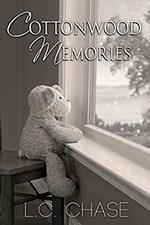
CottonwoodCottonwood Memories by L.C. Chase

For Brandon going home isn’t easy, but in order to move forward with his life with Zach, he needs to pay a visit to his first love, Avery.

This free short story was sparked by a photo prompt from a dear friend. In the photo, a young man is sitting by a window wearing nothing but a pair of superhero underwear and glasses. In his hands is a ragged teddy bear. I wondered, what is he thinking, and what does that little bear remind him of? And so began Cottonwood Memories.

Visit L.C.’s site for the free download!

Delivery with a Smile by Megan Derr

Jack worked hard to obtain a normal life. He might not love it, but it’s better than the criminal life he left behind—even if it cost literally everything, and he really does hate being a damned delivery man. On the bright side, his route includes a friendly old lady who makes the world’s best cookies and regales him with tales of her hot, jet-setting son. Normalcy definitely has perks.

Then he walks in on her and her son arguing with men at gunpoint.

Visit Less Than Three Press for the free download!

Whitetail Rock by Anne Tenino

Nikhil “Nik” Larson is a snarky, dark-skinned adoptee from India who grew up in the Whitest Town in America. Back to visit his parents Nik meets Trooper Jurgen Dammerung, a blond, butch motorcycle cop who’s so hot he leaves a con trail wherever he goes.

Jurgen is the epitome of everything Nik hated about growing up the lone Indian boy among a town of white people. But Jurgen surprises him rather (ahem) pleasantly, in spite of — or because of — Nik’s attempts to needle him. By the end of his visit, Nik realizes he likes Jurgen. But Jurgen’s so not the relationship type.

Right?

Visit All Romance Ebooks to download it for free!

And you can visit the GRNW Free Reads shelf on GoodReads to find even more free reads!

Cover Art Expose: Jordan Castillo Price!

Cover art is sometimes (very often) maligned in our genre. (We even discussed the many naked chests at GRNW 2013, which led to one of our favorite lines spoken at the conference–Lou Harper’s “In defense of the headless torso…”)

The truth is that the genre boasts a lot of fantastic cover artists, who have a tough role of capturing the reader’s eye and capturing the story’s essence, all in one small space.

One of the features for the GRNW blog will be to go out and talk with those amazing artists and find out more about the magic behind their process.

For our first Cover Art Expose, we talk with the wonderful Jordan Castillo Price, who not only self-publishes her work through JCP Books, but does all her own cover art!

At the end of this interview, we’ll also be doing a giveaway for JCP’s sci-fi novel Mnevermind 1: The Persistence of Memory.

partners21- What was the first book cover that you worked on?

At the time, I didn’t realize how rare this was, but I made a request and Torquere Press allowed me to design the cover to PsyCop: Partners, the print compilation of the first two PsyCop novels. In 2006 m/m was pretty new and I imagine a lot of the standard practices in place now were not established yet. Nowadays it would be quite rare to be allowed to design your own cover. Many publishers don’t even give their authors the right of veto, citing “house style” over the preferences of the author.

2- How long does a cover normally take? Which cover of yours took the longest (and why?)

I’d say I work on each cover about half a week to a week. Initially it’s getting all the elements in place. If they don’t work correctly, this is the point I go back to the drawing board. Sometimes things look fantastic in my head but they’re too busy or confusing on the page. The last few sessions I’ll spend cleaning up and tweaking, putting on finishing touches. Then I sleep on it and end up tweaking a few hours more.

My covers for the Petit Morts series took the longest because they’re vector art. Instead of colored pixels, they’re composed of mathematical points and curves. Theoretically you could zoom in infinitely and all the lines would still be crisp, unlike regular pixel-based artwork where it turns into little squares when you zoom or enlarge. It’s a more labor-intensive process but I wanted the bold graphic look that’s unique to vector art…well, I imagine you could mimic it with a pixel-based program but I was comfortable enough working in vectors. I’m a heck of a lot rustier nowadays. The last vector element I designed was the Spook Squad logo and FPMP seal on the back cover of the paperback.
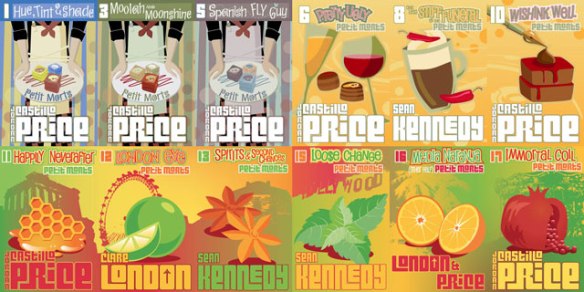
The Petit Morts series

The Petit Morts series

3- For the art nerds out there, what are your preferred tools and programs?

For paperback and PDF typesetting I use InDesign. For cover art, mainly Photoshop, though for vector work I prefer Illustrator. Photoshop has vector tools now, which is new-ish these past few years. I’m just more accustomed to Illustrator, which I used quite a lot in my day job for flyers and big signage (like the type of banner you’d see hanging from an overpass, for instance.) I was a graphic designer at a public library for many years, so I got to learn how to do things from postcards to bookmarks to those big ol’ overpass signs.

For any major art nerds who might wonder, I’m running CS6, though undoubtedly some new feature will come along and tempt me into upgrading to Creative Cloud. I try to train at least an hour a week through something like Photoshop User TV, or Lynda.com, or Kelby Training, or my local Adobe User Group, and inevitably I’m going to see something that’ll make me want to upgrade since these trainings tend to focus on the latest version. New Camera RAW integration looks really nice, for example.
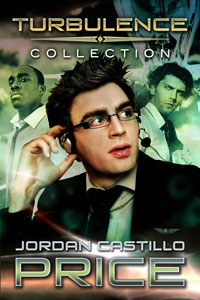
turbulence-2004- You’ve done a lot of series covers, with your Psycop books, Channeling Morpheus, Petit Morts, and the different chapters in the Turbulence serial.

What is it like when you’re tackling covers in a series? And how did your style differ between these series?

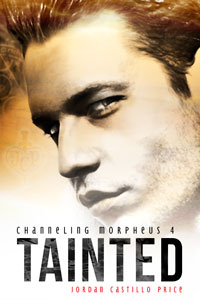
It seems like I must have realized a series should have a cohesive look—it’s just a matter of common sense—but PsyCop evolved over so many years in such a piecemeal way that it really didn’t have a particular “look” beyond the PsyCop logo. Certainly my skills improved a lot since 2006 as well. Since I’m now the publisher, I’m opting to redesign PsyCop so that it looks like an actual series. That project began last year. I’m working on Camp Hell (book 5) now.
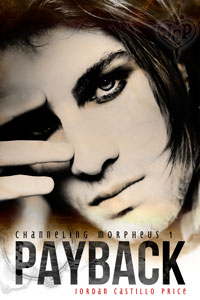
payback-200Sometimes a cover “look” will be dictated by choices the stock photographer made. Because the photographer added B&W high-contrast effects to the shot of Michael on the cover of Payback (Channeling Morpheus 1), if I wanted to use that shot, I needed to make all the subsequent cover art match it. (And I was really married to that shot.) For that series, I think it worked really well, but in general it irks me when stock photographers make artistic choices like B&W effects, or really close cropping. A lot of shots are unusable because half of someone’s head is cropped away, for instance, so I can’t position them where I need to in my composition. And if I want B&W, I can make my own B&W since I have filters too…and maybe I would have chosen a different sort of contrast than the photographer picked. /rant

5- You have a knack for finding excellent cover models for your books. (GRNW hearts Wild Bill!) How hard is that search process?
GRNW hearts Wild Bill

GRNW hearts Wild Bill

Thank you! I heart Wild Bill too…wow, that mouth. Searching through stock models is actually kind of nauseating for me, I’m not really sure why. I must be looking too hard at the monitor for too many hours.

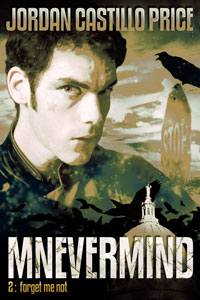
I will hoard good photos for years and years. I’ve been holding onto the cover model for Elijah from Mnevermind forever. I had nicknamed him Major Tom because he had a late 80’s New Wave look to him and he reminded me of the Peter Schilling song.

Some stock photos are pricier than others. I’m willing to pay for really expensive photos if need be because I’m self-publishing now and I can make that decision to invest, whereas authors working with publishers are usually limited to a smaller pool of more affordable art. Wild Bill was expensive, but oh so worth it.

I live in fear of putting a model on my cover and realizing he’s prominent on someone else’s book. It’s deplorable how few stock photos of men are available as opposed to women.

6- What cover was most challenging for you and why?

I was going to put Captain Kaye on one of the Turbulence covers, but older women are even more underrepresented than men. After hours of searching I found one model I liked…but the photographer had cropped her so close that I couldn’t position her anywhere on the page, and eventually I gave up.
bodyart2007- Is there a cover that you wish you could go back and redo?

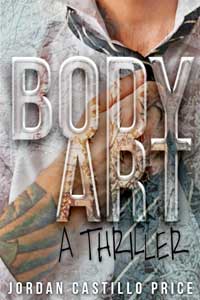
Absolutely, I’d do Body Art in a second. I think I was so excited to see that tattooed arm reaching to adjust a tie (it represents a theme in the book so well) that I didn’t consider the overall tone of the cover. In a re-do, I’d forget about presenting a visual narrative a certain scene and make it look more like a thriller. And I’d have lots of dark tree silhouettes. I also have a theory that the eyes are the most important part of the model (which is why I despise those naked manchest floating over cityscape covers in m/m) so I might dig around and find a good headshot to represent my main character.

8- Are there things that you hadn’t thought about before you started doing your own book covers?

Ebooks are changing fast. To give you some perspective, when I started making ebook cover art in 2007, the Kindle wouldn’t be on the horizon for over two more years. I guess I would have thought there’d be a standard electronic art size, but there really isn’t. Various devices have different resolutions as well as different ratios, kind of like all the different computer monitor sizes. I just go with a ratio of 2:3 now and it seems about as “standard” as you’ll get.

This is a bit of a non-sequitur, or maybe it’s related, but one thing I used Photoshop for as a graphic designer at a public library was to take nonstandard audiobook packaging, scan it, manipulate it into a standard ratio, and make it work with a package we could circulate. So I went to pick up a CD-set on hold today and wondered why it looked so familiar—had I listened to it? Then I saw it was from my old library and realized that I’d re-done the packaging myself a few years ago. Ha!

9- Do you have any recommendations you can share for those who are thinking about doing their own book covers?
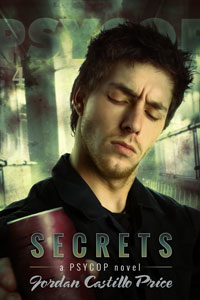
secrets-200Get really good at Photoshop and don’t waste your time with freeware programs. Buy an older version of Photoshop if money is an issue, just check the system requirements to make sure you can run it. It makes me crazy in certain publishing forums where new publishers are trying to figure out how to publish a paperback using freeware or Microsoft Word. I’m probably an Adobe snob, but it bugs me when people attempt to force consumer tools to do professional jobs and then wonder why it doesn’t work. Adobe software is a monetary and time investment, but it’s the industry standard.

If you’re totally new to Photoshop, grab a free one-week trial membership at Lynda.com and watch some intro courses for a solid week. I personally think the annual subscription there is worth much more than they charge. Photoshop is a very in-depth program, you’re not going to learn it in an afternoon. I’ve been learning since 1999, and as I said, I try to do an hour of continuing ed each week. If online learning isn’t your thing, invest in a class through your community college.

Once you have the hang of Photoshop, look at images you really like and try to reproduce them. I don’t care for most book covers so I look at movie posters instead. There are often multiple ways to get the same effect in Photoshop so tinkering will usually get you somewhere.

If you’re an author and the art is for your own books, be aware that publishers generally don’t let you do your own cover art.
forget-20010- Any future covers on the horizon you can tell us about?

I mentioned the star of my latest cover earlier: Elijah from Mnevermind (otherwise known as Major Tom, who I’ve been hoarding for at least five years). Book 2 of the trilogy, Forget Me Not, will be out later this month. I really enjoyed working on the covers for this series, both the photographic effects and the logo with the crows and the state capitol behind it. Their dreamy, intense and stylized tone really reflects the nature of the stories, a very gritty and realistic speculative fiction about false memories. The interiors of the paperbacks were also fun to lay out, where I used some subtle crow graphics on the pages.

Thanks so much for the interest in my cover art! Hopefully I didn’t send anyone into a design-geek coma!

Thanks, JCP! And for anyone interested, you can download a free PDF of JCP’s cover art gallery!

Giveaway Time!

To celebrate Mnevermind 2: Forget Me Not coming out later this month, we’re doing a ebook giveaway of Mnevermind 1: The Persistence of Memory to one commenter below. We’ll pick a winner on Sunday. Good luck!! 😀
Upcoming GRNW Events!

We have a great line-up of upcoming events that we wanted to share (and we hope you can join us!)

Feb13_BoxThursday, Feb. 13 – Rainbow Valentine (University Book Store)

On Thursday, Feb. 13 at 7pm, we’ll be hosting at Seattle’s University Book Store the special reading event “Rainbow Valentine” that celebrates LGBT romance fiction, just in time for Valentine’s Day!

GRNW 2014 authors Daisy Harris, M.J. O’Shea, Rick R. Reed, and Sheri Lewis Wohl will all be reading from their work, and following the readings there will be an author Q&A.

The event is public and free. Come celebrate love stories with us!

Visit the University Book Store to learn more.

Gaylaxy QuestFriday, Feb. 21 – Gaylaxy Quest (Gay City)

Gay City, Queer Geek, and GRNW are joining together (like Voltron!) to host the reading event “Gaylaxy Quest: A Celebration of Queer Sci-Fi and Fantasy Fiction” on Friday, February 21 at Gay City’s Calamus Auditorium at 7pm.

This event will feature readings by GRNW 2014 authors Astrid Amara, Ginn Hale, Laylah Hunter, and Samuel Jarius Pettit, and should be an awesome evening of queer speculative fiction.

Following the readings, there will be an author Q&A and also an after party in the auditorium featuring free snacks and drinks. Books by the authors will also be on sale.

This event Is free and open to the public. We hope you can come!

Visit Gay City’s site for more info.

More Upcoming Events!

March 2014 – We’ll be holding our next Seattle LGBT Romance Reader Group meeting in March, most likely the weekend of March 8-9, to coincide with the Gay City LGBT Library book sale. Stay tuned for more info!

Wednesday, April 30, 2014 – Seattle Public Library, Gay City, and GRNW are partnering together to present a special reading event at SPL’s Central Branch that spotlights LGBT mysteries and suspense!

The event will feature readings by GRNW 2014 authors Nicole Kimberling, Lori L. Lake, and Lou Sylvre, and will also include a Q&A following the readings.

This event will be free and open to the public. More information coming soon! 😀

We’re SUPER excited about these upcoming events and the chance to spread more awareness of LGBT genre fiction and its many awesome local authors. We hope you can come join us and be part of the celebration!

Self-Publishing: The Dirty Truth

Harper_LouBy Lou Harper

Self-publishing is the latest gold rush. There’s news of riches to be made but the reality is far grittier. During actual gold rushes the most reliable road to prosperity wasn’t finding gold, but selling food, equipment, and sex to the prospectors. According to Galleycat almost 80% of self-published authors make less than $1,000.- a year, and only 5% make more than $20,000.- a year. Those are sobering numbers.

So who should self-publish? It offers the best profit-to-risk ratio to established authors with a large fan base. However, for the majority of first time authors it’s far more beneficial to go with a reputable publisher, but there are always exceptions. Between those two extremes there are a lot of authors for whom self-publishing can prove beneficial, possibly alongside the traditional route.

There are pros and cons both to going with a publisher and the alternative of publishing your book yourself. A reputable publisher will provide you with editing, cover, and at least some promo. They can also do many other things for you, like taking print copies of your book to trade shows, or making sure that your book is featured prominently on the home page of an online retailer. On the other hand, self-publishing gives you higher royalty rates and control over all aspects of your book, but it also means you’re responsible for everything.

Even if you don’t care if you make money on your books or not, you’re putting your book out there to reach readers, and your chances are far better with a professional quality book. There’s a very good reason why self-publishing has such a terrible reputation, and why so many readers refuse to touch self-published books. Before jumping into this endeavor, you need to know what’s involved in producing your own book. Nowadays anyone with a word processor can upload an ebook to Amazon—it doesn’t make you an author. That title demands commitment and professionalism.

There are four main stages in turning your finished manuscript into a book: editing, copy editing/proof reading, cover design, and formatting. They are all necessary and they all cost money. You might be able to do some of them yourself, but nobody can do them all.

Editing

There are many reasons to self-publish, and not all of them good. Possibly the worst one is: “I don’t need an editor to tell me how to write.” There are two things with this statement. Firstly, that’s not what editors do. Secondly, we all need help. Writing is a mostly solitary endeavor, but once that first or second draft is done, it’s time to solicit some feedback.

Beta readers and critique partners go a long way to improve your book, assuming you listen to them. The good thing about them is that they are free. You can collect them from the ranks of your fans and fellow writers. A good beta reader is on a similar wavelength as you, understands what you’re trying to get across, and thus can tell you if you come short. They are not always right but you should consider every comment carefully. As Neil Gaiman said: “…when people tell you something’s wrong or doesn’t work for them, they are almost always right. When they tell you exactly what they think is wrong and how to fix it, they are almost always wrong.”

Content editors are professionals, going on far more than gut reactions, and thus cost money. Their job is to make sure your story doesn’t have giant plot holes, character inconsistencies, awkward dialogue, and a bunch of other things affecting the story as a whole. Yes, the process is often painful, but in the end it can mean the difference between a good-enough and an as-good-as-it-gets story. Finding a good editor is like finding that vein of gold.

These days many content editors also do copy editing, i.e. making sure everything is factually correct, checking that foreign words are spelled right and mean what you think they mean, ensuring you don’t include anything that could get you in legal trouble, etc.

Proof reading

A proof reader, aka a line editor, checks the manuscript for grammar, spelling, typos, punctuation, homonyms, etc. Skipping this step is one of the worst mistakes a self-published author can make, yet it happens all the time. Readers will forgive the occasional typo, they occur even in novels from mainstream reputable publishers. However, too many errors will throw most readers out of the story, ruining their experience.

It’s easy to think that with all those content editing eyes on it, the manuscript must be flawless by this point, but it never is. The recurring story is: Author has checked the manuscript umpteen times and is convinced it’s perfect. Author publishes book, and soon reviews start flowing in with complaints about the errors. Author finally sends the book to a proof reader, and it comes back full of red ink. Author makes corrections and uploads the new version but unfortunately the damage is already done.

Cover design

Unless you have a background in graphic arts, don’t make your own cover. Professional designers have spent years learning things like composition, color theory, typography, etc. Picking up a couple of Photoshop tricks won’t get you the same results. Yes, you’ll think your design is beautiful, but it probably isn’t, and the friends you’re asking for their opinion on it won’t tell you the truth either.

Formatting

This is probably the easiest thing you can do yourself, assuming you’re at least a little bit technically inclined. Formatting might be as involved as making multiple ebook formats for multiple vendors, or as simple as making one format and uploading it to a single aggregator, like Smashwords and Lightsource. Both options have their pros and cons. If you like having maximum control, the former is better. If you want the least amount of work, the latter will fit you best.

However, if looking at the formatting palette in MS Word gives you a headache, you should hire a professional. There are many internet companies offering formatting services for a reasonable fee.

In conclusion, if you decide to go the self-publishing route, you should do it right, but doing it right will costs you time and money. Look at it as an investment in your writing career.

Coming Next: A Practical Guide to Self-Publishing

Lou Harper is an author with numerous m/m titles and A Rainbow Award under her belt. She has published several books with Samhain Publishing, but also puts out a few books on her own, and she intends to keep on doing both. Visit Lou’s website.